labor
The Automation Boundary: Why We Must Not Robotize Ourselves
Sarah O'Connor's new book argues the real danger isn't robots replacing workers, it's AI forcing humans to work like machines. A review and a warning.
By Priya Raman, Labor, Policy & Industry Standards · June 22, 2026 · 6 min read
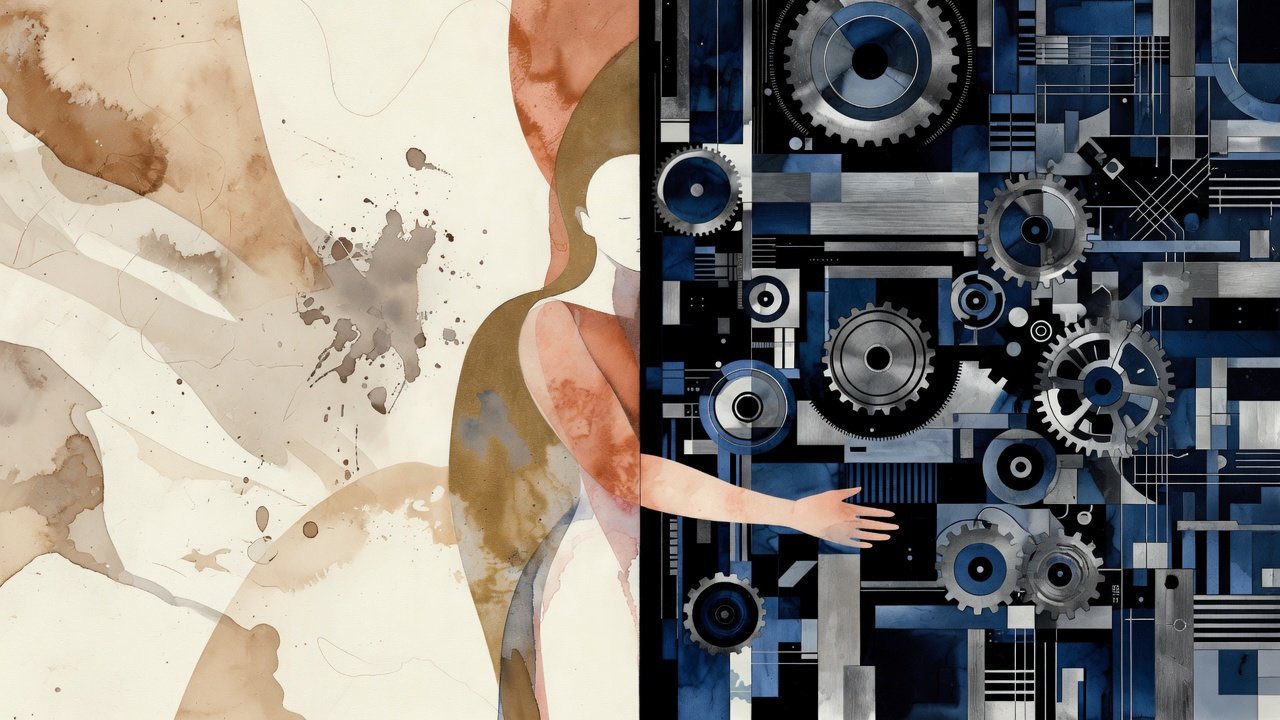
A worn hardcover book lying on a warehouse conveyor belt
The narrative surrounding physical AI is almost exclusively dominated by engineers and venture capitalists, individuals whose primary metric for success is the total automation of human effort. But as the technological capability of robotics accelerates into the mainstream, a critical sociological question is finally forcing its way into the conversation: just because a machine can perform a task, does that mean it should?
This week, that debate was thrust into the spotlight by the mid-June release of We Are Not Machines, the highly anticipated new book from Financial Times journalist Sarah O'Connor. The subsequent critical discourse, spearheaded by labor economists and journalists alike, has provided a vital, philosophical counter-weight to the breathless hype of the robotics industry.
O'Connor's thesis forces us to confront a deeply uncomfortable reality. While society has spent the last decade worrying about machines taking our jobs, a far more insidious shift has occurred: the integration of AI is effectively forcing humans to work like robots. As we stand on the precipice of humanoid robots entering our homes and hospitals, we must urgently define the boundaries of automation.
The Sterile Efficiency of the Algorithm
The first boundary that needs to be addressed is the psychological toll of AI-driven workplace management. In industrial and logistics environments, the "sterile efficiency" of the robotic arm has become the gold standard against which human workers are measured.
When a facility is augmented by AI, human workers are frequently subjected to relentless, algorithmic surveillance. Software monitors eye movement, tracks the precise millisecond of a bathroom break, and dictates the optimal physical trajectory for a human to pick up a box. The worker is no longer an autonomous agent; they are a biological node in a machine-paced network.
O'Connor's work brilliantly highlights this paradox: the technology that was explicitly promised to liberate humans from dull, repetitive labor is currently being used to aggressively optimize and surveil that exact labor.
Before we introduce advanced humanoids into these environments as "collaborative" workers, regulators must establish hard limits on biometric and algorithmic surveillance. A physical AI should adapt to the natural cadence of a human workforce, not force humans to adapt to the relentless, frictionless pace of a machine.
The Illusion of Automated Care
The second, and perhaps more profound, boundary explored this week concerns the absolute limits of robotizing care. As global populations age and the care-worker deficit deepens, robotics companies are eagerly pitching humanoids as the ultimate solution for eldercare and medical assistance.
From an engineering perspective, a robot can absolutely be programmed to lift a patient out of bed, dispense medication at the correct hour, and monitor vital signs. It is an engineering problem of spatial reasoning and payload capacity. However, from a sociological perspective, this represents a catastrophic misunderstanding of what "care" actually is.
| The Mechanics of Tasks | The Nuance of Care |
|---|---|
| Dispensing a pill at 8:00 AM | Noticing that a patient seems unusually withdrawn today |
| Lifting 150 lbs from a bed to a chair | Providing the gentle reassurance of human touch during a frightening transition |
| Reciting a scheduled daily greeting | Engaging in spontaneous, empathetic conversation |
Care is not merely a sequence of physical tasks; it is a profound transfer of human dignity and empathy. The sterile efficiency of a machine, no matter how perfectly it replicates a smile or modulates its synthetic voice, is hollow. When a human caregiver holds the hand of an elderly patient, the value is not in the physical pressure applied; the value is in the shared vulnerability of two living beings.
Drawing the Line
We Are Not Machines serves as a crucial warning siren for the physical AI industry. The future of work and domestic life is not predetermined by the trajectory of technological advancement. It is a choice.
As we move past the mid-point of 2026, the regulatory conversation must shift from "How fast can we automate?" to "Where do we draw the line?" We must proactively categorize certain sectors, like intensive eldercare, early childhood education, and palliative medicine, as fundamentally human domains, legally protected from total automation.
The successful integration of physical AI will not be measured by how many human interactions we can replace with machines. It will be measured by our ability to use these extraordinary tools to handle the heavy, dangerous, and purely mechanical burdens of the world, specifically so we can free up human beings to do the things only humans can do: empathize, connect, and care.
More From Robotics Weekly
Part of Issue 2: The Reckoning, published June 22, 2026→